• 1974: Lost in time?

    May 1974: This is where I came in.

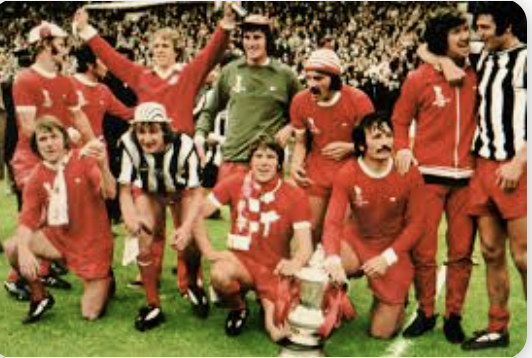
    A five-year-old boy sits, not exactly glued to, but rather remotely interested in the events unfolding before him on the family’s black-and-white television. An unusual event is taking place, as a live football match is being shown on the box. The boy’s father is getting himself worked into a lather, and this rubs off on the boy. Intrigued now, he watches the 1974 FA Cup Final unfold into a 3-0 procession of a victory for Liverpool over Newcastle.

    Hooked, the lad is now a Liverpool supporter.

    The months pass and the boy gets to know the players – not just of Liverpool, but of most First Division teams – by name, and, frankly speaking, becomes just a tad unbearable in his obsession. The next few years see football become an all-consuming passion with far too much time than is healthy being frittered away in the pursuit of meaningless trivia and so-called knowledge, and although this tendency has reduced over the decades, the late middle-aged man that boy became still possesses the ability to spout out by memory that successful Liverpool side.

    (Clemence, Smith, Hughes, Thompson, Lindsay: Hall, Cormack, Heighway, Keegan, Toshack, Callaghan, with Lawre as the only substitute.)

    Legends all.

    Well, ok then, not quite all of them. Some more than others, perhaps.

    However, while the majority of these players may well be known to the majority of football fans of a certain age, it is entirely possible that a good few of them may have faded from the nation’s collective memory. Let’s, then, spend a few minutes delving back in time to have a look at some of these (relatively) unsung heroes.

    Playing left-back that day, Alec Lindsay thought he had opened the scoring early in the second half when he played a one-two with the legend that is Kevily Keegily on the edge of the Newcastle box before slamming the ball past the hopeless (or hapless?) Iam McFaul in the United goal. Imagine his disconcertion then, when the ‘goal’ was chalked off due to Keegily’s perm straying offside by an approximate distance of 0.0002mm?

    Looking like a roadie for a 1970s glam rock band, Lindsay had a pair of sideboard chops to be proud of. Capped four times by England, all under the caretaker management of Joe Mercer in the summer of 1974, Lindsay originated from Bury, where he played almost 150 matches before being signed by Bill Shankly in 1969. Winning the league title and UEFA Cup in 1973, and the aforementioned 1974 FA Cup, Lindsay stayed at Liverpool until the autumn of 1977, but despite gaining a European Cup winner’s medal from the bench in Rome in 1977, Lindsay’s career at Liverpool began to peter out shortly after that 1974 success. Writing many years later in his autobiography, Bob Paisley, Shankly’s successor, had this to say about Lindsay, “Alec peaked at the end of that successful 1973/74 season but was never the same player again after his life was overtaken by a series of personal problems. Unfortunately, they badly affected his game, and he began to lose heart, which showed in his performances. Sadly, Alec was one of those players who wasted a lot of his talent, and I am sure he would have admitted that himself when he looked back at his career. It all went wrong when he was at the top of his profession.”

    After leaving Liverpool, Lindsay spent a season at Stoke City before decamping for a couple of years to the NASL and retiring at the relatively young age of 31.

    Brian Hall wore the number 8 shirt on that rainy day at Wembley half a century ago now and was many people’s choice for Man of the Match as he industriously broke up what little force Newcastle were offering in midfield, while orchestrating Liverpool’s fluent passing game. Signed from university where he completed a Bachelor of Science degree, Hall’s greatest moment in a Liverpool shirt was arguably at Old Trafford in the spring of 1971 when he scored the winning goal in the 1971 FA Cup semi-final against arch Merseyside rivals, Everton.

    Nailing down a place under Bill Shankly, Hall was a stalwart in the side for five seasons before losing his place in the starting line-up to an emerging Jimmy Case halfway through the 1975-76 season. Later admitting he gave up on his Liverpool dream too early, Hall left Liverpool at the end of that season, departing for Plymouth Argyle. Sadly, Hall died in 2015 due to  leukaemia.

    Lining up alongside Hall in Liverpool’s midfield for their 3-0 demolition of the Magpies was Scotland’s Peter Cormack.  Like Hall, Cormack’s Liverpool career would peter out at the halfway point of the 1975-76 season, but before that happened, he would enjoy large swathes of success in the red shirt.

    Born in Edinburgh, Cormack started his career north of the border with Hibernian before transferring to Nottingham Forest in 1970. Two years at the City Ground passed before a 1972 transfer to Liverpool, with Bill Shankly telling a bemused Cormack as he signed his contract, ‘he was the final piece in the jigsaw.’ Success followed over the next two seasons as Liverpool captured the league and UEFA Cup double in 1973, and the FA Cup a year later.

    A bad injury saw Cormack play his last Liverpool game in December 1975, and following a three-year spell at Bristol City, Cormack returned to Scotland, where he played out the last years of his career back at Hibernian.

    After spells in management, Cormack left football altogether in 2002, before sadly passing away due to complications of dementia.
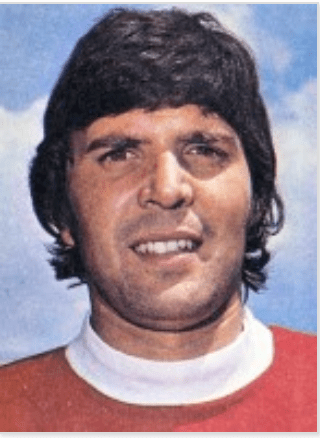
    Finally, the substitute that day in May 1974 was long-serving full-back, Chris Lawler. Although only 30 years old, Lawler’s career at Liverpool was already winding down when the red men took on the Geordie counterparts at Wembley. Lawler only made 18 league appearances in 1973-74, and hadn’t featured in the team at all for almost three months before getting the nod from Shankly to take up his place as the only sub on the Liverpool bench.

    Liverpudlian by birth, Lawler joined Liverpool straight from school and signed professional forms on his seventeenth birthday. Making his debut in 1963, Lawler nailed down a regular place in the side in the 1964-65 season, appearing in Liverpool’s first-ever FA Cup Final victory in the 2-1 win over Leeds United. The next yen years saw Lawler rack up no less than 549 appearances in all competitions, scoring an amazing 61 goals from the right-back position.
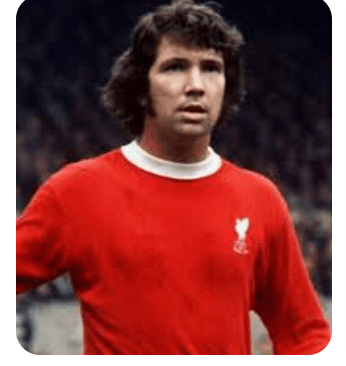
    Known as the ‘Silent Knight’ for both the way he would seemingly ghost into goalscoring positions on the pitch and his quietness off it, Lawler was the very epitome of consistency, missing just three league games in an eight-season period between 1965 and 1973. However, a cartilage operation following an injury sustained against QPR in November 1973 spelt the beginning of the end for Lawler at Liverpool, and although he was to stay at the club for another two years, first-team appearances under Shankly’s successor, Bob Paisley, were extremely limited due to the emergence of Phil Neal. Neal, of course, would go on to inherit Lawler’s consistency, meaning that between them the two mean played right-back for Liverpool almost uninterrupted for close on twenty years.

    After leaving Liverpool in October 1975, Lawler played for Portsmouth and Stockport County, before spells in Wales, Norway, and the NASL rounded out his career.

    Chris Lawler returned to Liverpool for a period as reserve team coach under Paisley and Joe Fagan, before being unceremoniously dismissed by Kenny Dalglish in 1986.
  • Monday, 8 May 1972. A date that has gone into the annals as one of the most significant and infamous in the 150-plus years of organised English league football ended with Derby County crowned unlikely league champions. An evening of unprecedented drama saw Leeds United denied a league and FA Cup double at the death. In contrast, a last-minute Liverpool ‘goal’ at Highbury, which would have given the Anfield men their eighth league title, was controversially ruled out.

    Before we trail through the details of that balmy spring evening over half a decade ago, a look back at the 1971-72 season in context is highly recommended. 

    The season had kicked off with Arsenal, the defending champions, having pipped Leeds United to the 1970-71 title in controversial circumstances. Leeds had suffered from a contentious refereeing decision in a late-season home defeat by West Bromwich Albion that had proved costly, and some of the club’s more enthusiastic – shall we say -supporters had expressed their displeasure by way of staging a pitch invasion. The Football League had taken a dim view of such contretemps and had ordered Leeds to play the first four home games of the 1971-72 season away from Elland Road. This had proven costly, as Leeds had dropped points in these games.

     Broadly speaking, it had been a gung-ho of a season with any one of four sides in with a chance of the title right up to the last weeks of the season, and as implied above, three still in with a shout until the last kick of the campaign. Manchester United, under the leadership of Frank O’ Farrell, had made most of the early running and were clear at the top going into the New Year.

    Poor form after the Christmas lights came down saw the Old Trafford team fade away, and for a long while, it looked as if it would be their noisy neighbours, Manchester City, who would take the title for the second time in four years. Led by Malcolm Allison, who had jettisoned manager Joe Mercer from power, City were playing expansive football and looked like a shoo-in for the crown. It was then that Allison made what many considered to be a fatal mistake by signing the mercurial Rodney Marsh. Although undoubtedly talented, Marsh upset the cohesion of the Maine Road side, and their form began to slip away.

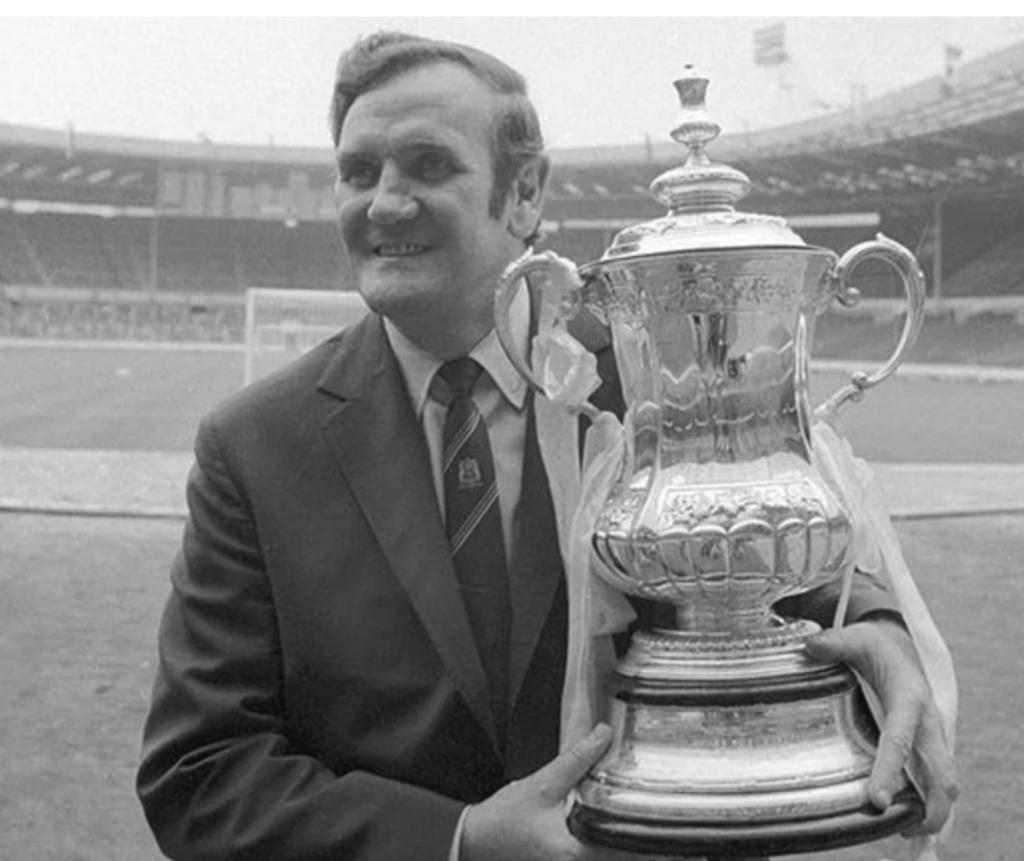
    So, it came to pass that the destiny of the title would be in the hands of proceedings at Highbury and Molyneux, homes of Arsenal, who would be hosting Liverpool, and Wolves, who would be welcoming Don Revie’s Leeds United to town, respectively. Sitting atop the table were Derby County, who had completed their league season a week earlier with a single-goal victory over Liverpool and were now on holiday in Spain on an end-of-season break. 

    To hold onto top spot, Derby had to hope that Leeds would be defeated by Wolverhampton, while Liverpool would fail to win at Arsenal. To add to the intrigue, Leeds were looking to complete the league and FA Cup double, having defeated Arsenal at Wembley in the cup final barely 48 hours earlier. For Wolves, this was far from an end-of-season dead rubber either, coming as it did amid an all-England UEFA Cup Final mash-up with Tottenham Hotspur.

    Despite the undoubted fatigue of the previous weekend, Leeds were heavy favourites to grab at least the point that would bring the title back to Elland Road for the second time in four seasons. 

    As both matches kicked off, the league table looked thus:

    From the outset, Leeds took the game to Wolves in an attempt to make an early and potentially decisive breakthrough. Bremner went close early on, and then Allan Clarke appeared to be fouled by Wolves ‘keeper, Phil Parkes, but the referee waved away Leeds’ appeals for a spot kick. 

    In front of a season-best attendance of 53,379, Wolves attempted to find a foothold in the game but were lucky to survive an even more contentious penalty appeal after 25 minutes when defender Bernard Shaw appeared to use both hands to claw away another effort by Clarke.

    Intense Leeds’ pressure could not force a breakthrough, and two minutes before half-time, the inevitable happened. From Wolves’ second corner of the night, the ball was only half cleared, and Wolves’ Munro slammed home through a crowd of players. Leeds went in at half-time a goal down, but by no means out of the match or the title hunt

    Over at Highbury, the travelling Liverpool support greeted news of the Wolves’ goal with delight and used it to attempt to drive their team forward. The truth was, however, that nothing much of any note was happening in North London. For a side that needed to win to stand any chance of taking the title, Liverpool were not pulling up any trees and seemed content to spend most of the first half on the back foot and playing on the break, with the result that half-time came and went with the scoreline blank.

    Back at Molyneux, the second half was underway. Lorimer went close with a fierce free kick early on, and then Leeds started to turn the screw. Wave after wave of attack fell down on the home side’s defence, yet Leeds were unable to grab the all-important breakthrough. As they poured forward, more and more gaps were opening up at the other end of the pitch, and Harvey in the Leeds goal was called upon on several occasions to keep Revie’s men in the match. 

    With 67 minutes gone, something had to give, and unfortunately for the men in all-white, they were once more on the receiving end. A sweeping Wolves break ended with stalwart Derek Dougan converting a Richards’ cross to seemingly put the match and the title out of Leeds’ grasp.

    Don Revie had other ideas and ordered his men forward, forgetting all pretence at defence now. With Jack Charlton and Billy Bremner pushed right up front, Leeds were not giving up, and when Bremner smashed one home straight after kick-off, the Great Escape was back on.

    By now, things were heating up at Highbury with everyone in the near 40,000 attendance seemingly aware of events in the Midlands. With no love lost for Leeds amongst certain sections of the home support at Highbury, the famous old ground was witnessing the unprecedented sight of two-thirds of the attendance cheering for the opponents. First Hughes went close for Liverpool, then Heighway, Keegan, Hall and especially Toshack, but still the Arsenal goal remained intact.

    Into the last few minutes of both matches now, and as things stood, Derby County were going to be crowned champions unless either Liverpool or Leeds could score right at the death. 

    At Molyneux, Terry Yorath thought he had grabbed it at the death when his looping header cleared Parkes in goal, only for Taylor to head the ball off the line.

    Time for one more Liverpool charge at Highbury, and when Welshman John Toshack put the ball in the Arsenal net, approximately 30,000 fans roared their approval – only for the referee to signal for offside and chalk the goal off.

    Shortly afterwards, two final whistles blew, and Derby County, sunning themselves on holiday, were crowned champions for the first time.

    The final table:.

    Amidst the disappointment felt by Liverpool and Leeds – some might say ‘sour grapes’ – both sides’ managers complained long and hard about decisions given against their sides on the night. Revie felt Leeds should have been awarded at least two penalties, while Bill Shankly of Liverpool was resolute in his convictions about the legality of Toshack’s last-minute ‘winner’. 

    Not that it mattered in the end, as nothing was going to change either result and both Shankly and Revie would bounce back from these setbacks by leading their sides to the next two league titles, in 1973 and 1974, before the title once again reverted back to Derby in 1975.

    As an aside, in later years, both the matches played out on this date would come under scrutiny amidst allegations of attempted match-fixing. Most famously – or infamously – allegations came to light five years later that Don Revie had been behind an approach to some Wolves players to ‘take things easy’. Several players on both sides were named as allegations, and denials went backwards and forwards before Billy Bremner won a libel suit against the Sunday Mirror for printing the allegations.

    Forty years after the match, Liverpool’s captain on the night, Tommy Smith, wrote his autobiography and in it claimed his teammate, and sworn enemy, Emlyn Hughes had approached him and another Liverpool player, Ian Callaghan, before the game saying that unnamed Arsenal players had indicated they would be willing to take the foot off the gas if conditions were right. According to Smith, Hughes had asked him for advice as to what to do, but Smith hadn’t believed him and so nothing had been done at all.

    The tawdry and, it should be said, totally unproven, allegations should not take away any of the shine of what was undoubtedly one of the most exciting nights in English football history.